A red string bracelet is worn as a symbol of protection and good luck. The tradition appears in Kabbalah, in Chinese folklore, in Hinduism and in Slavic and Baltic folk belief, and each of those gives it a slightly different meaning. Most people today wear it on the left wrist, and most wear it for a mix of reasons: something to believe in, something to remember someone by, and something that looks good.
That is the short answer. The rest of this guide covers where the tradition comes from, which wrist to choose and why, whether it conflicts with Catholic faith, how to tie it, and what it means when it eventually breaks.
What a red string bracelet means
The same object carries different meanings depending on which tradition you ask. None of them cancels out the others, and plenty of people wear one without subscribing to any of them.
Kabbalah
This is the version most people have heard of. In Kabbalistic practice the red string is wound around the tomb of Rachel in Bethlehem, then cut into bracelets and tied on the left wrist with seven knots. It is worn as protection against the evil eye, meaning envy or ill will directed at you by others.
The left wrist matters here specifically. In this tradition the left side is the receiving side of the body, so a protective object placed there guards what comes in.
The Chinese red thread of fate
In Chinese legend an invisible red thread connects people who are destined to meet. The thread can tangle or stretch but it never breaks. Worn as a bracelet, it is about connection rather than protection: a reminder of a person, or of the belief that the right people find each other eventually.
Hinduism and Buddhism
In Hindu practice a red or red-and-yellow thread called kalava or mauli is tied at the wrist during ceremonies, on the right wrist for men and unmarried women, and on the left for married women. In Tibetan Buddhism a blessed red cord is given by a teacher and is understood to carry that blessing with the wearer.
Slavic and Baltic folk belief
Closer to home, red thread has been used across Lithuania and the wider region as a protective charm for centuries. It was tied on infants against the evil eye, on livestock, and around a wrist or ankle to keep harm away. Red was the colour of life and of blood, and therefore the colour that repels what wishes you ill.
This is the layer that gets left out of most guides written in English, and it is the reason the red string never reads as exotic here. Plenty of Lithuanian grandmothers tied one on a child’s wrist without ever having heard of Kabbalah.
Which wrist should you wear a red string on?
This is the question we get most often, and the honest answer has two halves.
The left wrist
The left is the traditional choice in Kabbalah and the most common choice generally. The reasoning is that the left side receives, so protection belongs there. If you are wearing the bracelet for protection or luck, and you want to follow the tradition as it is usually practised, wear it on the left.
The right wrist
The right is the giving side, and in Hindu practice it is where the thread is tied for men and for unmarried women. Some people also simply wear it on the right because they are left-handed and the bracelet survives longer on the quieter hand.
Does it actually matter?
Within a specific practice, yes, and if you were given the bracelet as part of a ceremony, follow what you were told. Outside of one, no. A red string on the wrist that you actually keep wearing does more for you than a correctly placed one you take off after a week.
Can a Catholic wear a red string bracelet?
Yes, and the question deserves a fuller answer than it usually gets, because it is the one people search for most.
The Catholic Church has no rule against wearing a red string. What the Catechism does warn against is superstition, meaning attributing power to an object itself rather than to God. The distinction is about what you believe the string is doing, and it is a distinction most people make instinctively.
Wearing a red string as a reminder of someone you are praying for, as a keepsake, or simply because you like it sits comfortably within Catholic practice. Believing that the string itself protects you, independently of faith, is what the Church would identify as superstition. Many Catholics wear one in the first sense without a second thought, in much the same way they might wear a bracelet from a pilgrimage site.
Some priests will tell you not to bother with it, others will not mind at all. If it matters to you, the sensible move is to ask your own parish priest rather than the internet, including us.
How to tie and activate a red string bracelet
Ceremonial versions follow a specific method. If you bought yours as jewellery, none of this is required, but people ask, so here it is.
The seven knots
In the Kabbalistic tradition the string is tied with seven knots, seven being a recurring number in Jewish thought. Traditionally another person ties it for you, someone who wishes you well, because the intention behind the tying is considered part of it. You keep it on until it falls off by itself.
What people say while tying it
The prayer usually associated with it is the Ana Bekoach, and one knot is tied for each of its verses. Outside religious practice, people hold an intention in mind for each knot instead. There is no wrong version of this, and nothing breaks if you skip it.
The practical note that matters more: tie it loosely enough to slide a finger underneath. String shrinks slightly when it gets wet, and a bracelet tied tight on a dry day becomes uncomfortable after the first shower.
What does it mean when a red string bracelet breaks?
In most traditions this is read as a good sign rather than a bad one. The interpretation is that the string absorbed what was aimed at you and gave way in the process, so its work is finished. In the Chinese version, a thread that finally snaps is sometimes taken to mean the connection it stood for has already been made.
The unromantic explanation is that cotton thread worn continuously for months, through washing and sleeping, eventually wears through. Both explanations can be true at once. Traditionally you do not repair it. You let it go and, if you want, tie a new one.
If you would rather it lasted, that is a materials question rather than a symbolic one, and it is covered further down.
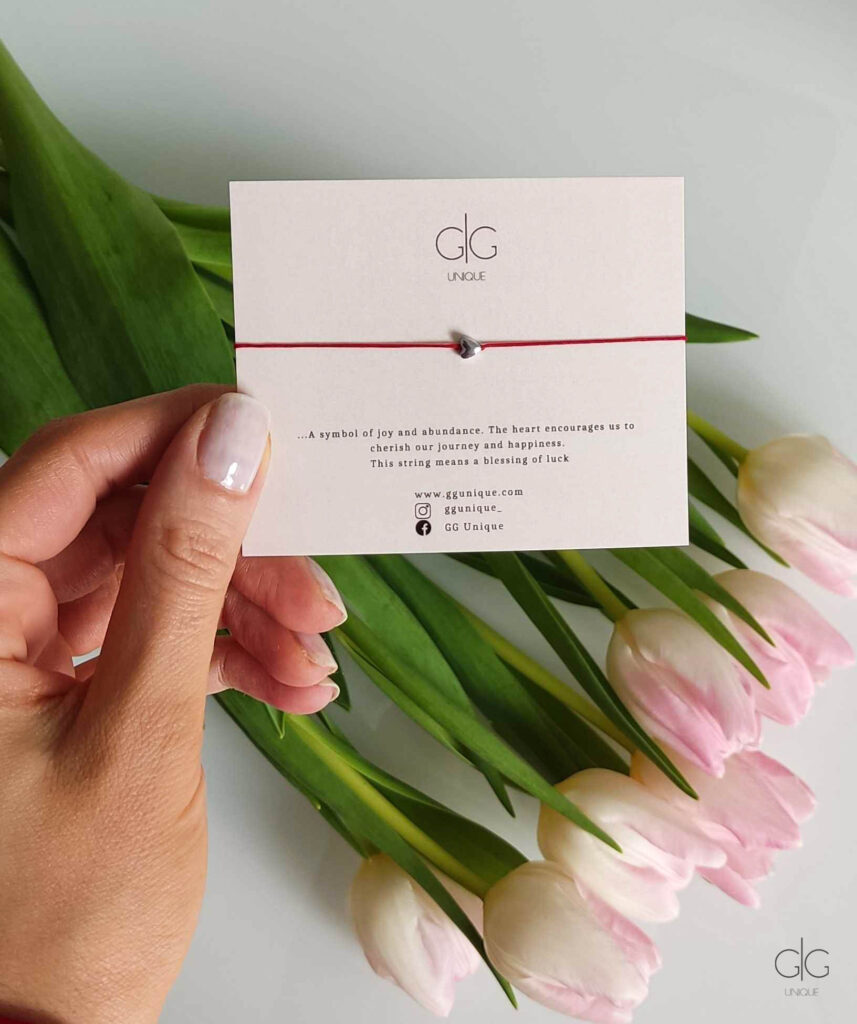
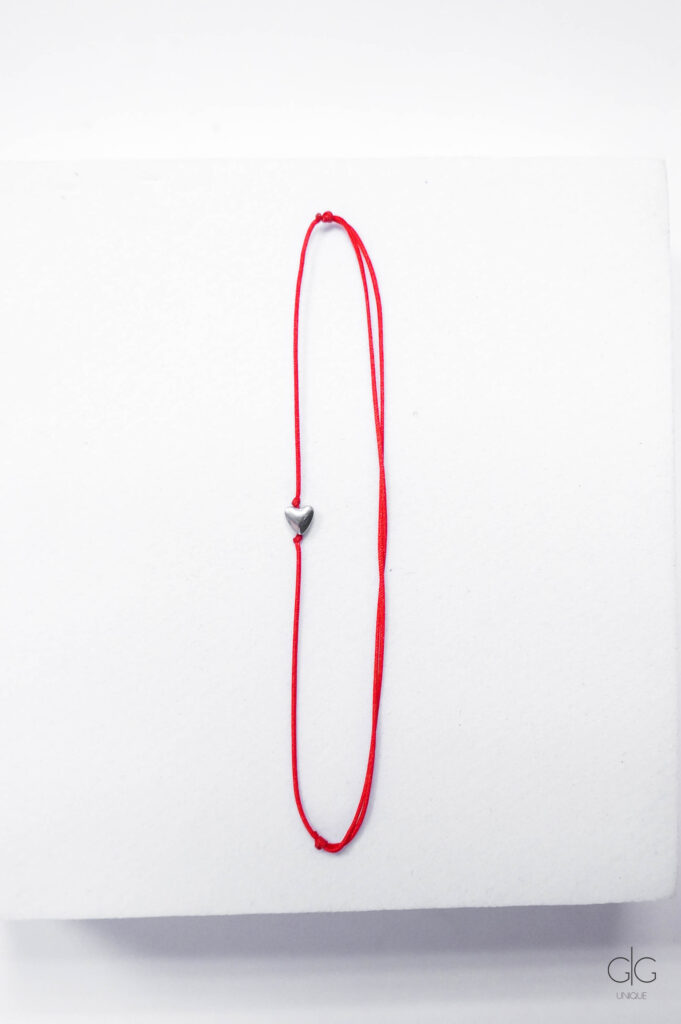
If yours has just broken and you want to tie a new one, our red string with a silver heart is made by hand in Lithuania.
We have also written a separate piece on this: what it means when a red string bracelet breaks, with what each tradition says and what to do with the broken string.
Why do celebrities wear red string bracelets?
The visible wave started in the early 2000s, when Madonna’s involvement with the Kabbalah Centre put the red string on magazine covers. Ariana Grande, Victoria Beckham, Leonardo DiCaprio and plenty of others have been photographed wearing one since.
Some wear it for genuine belief, some because it was a gift, and some because a plain red thread is one of the few accessories that photographs well without saying anything about money. That last reason explains its staying power better than the first two. A red string tells you nothing about someone’s budget, which on a red carpet is unusual.
How to wear it with the rest of your jewellery
A red string is easy to style precisely because it is unfinished-looking. Three combinations work reliably.
Alone. On a bare wrist it reads as deliberate. This suits anyone whose other jewellery is minimal.
Stacked with metal. Red sits well against both silver and gold, so it does not force a choice. Pair it with a plain chain bracelet and the contrast between soft thread and hard metal is the point.
Opposite a watch. Watch on one wrist, string on the other, is the arrangement most men settle on and the one that survives daily wear best.
Choosing a red string bracelet that lasts
Plain cotton thread lasts a few months. If you want one that survives longer, the difference is in the cord and in the charm.
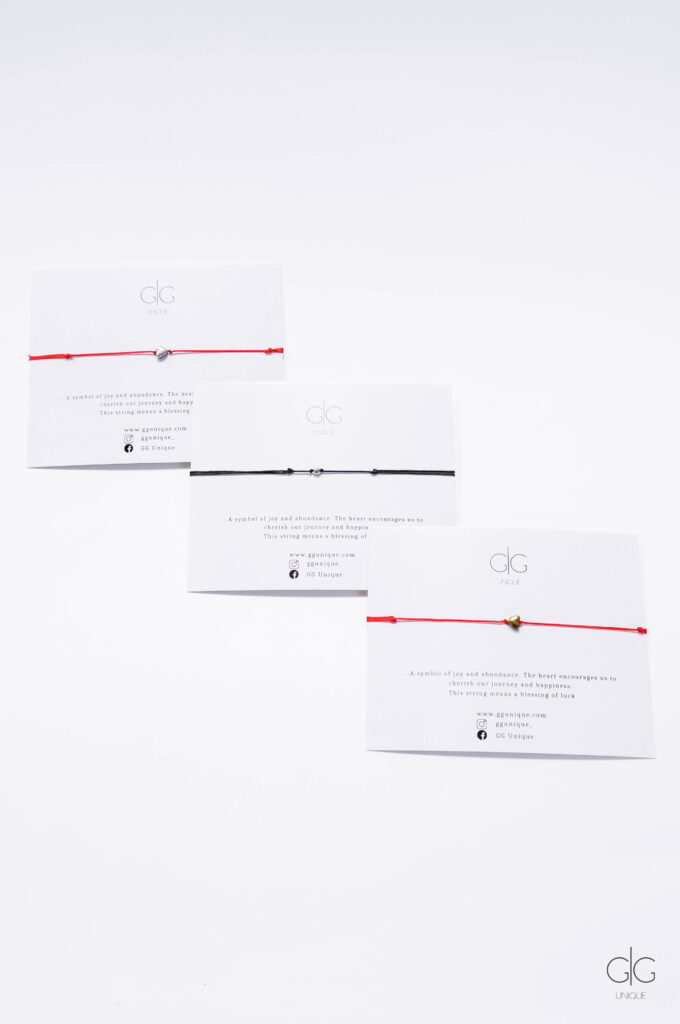
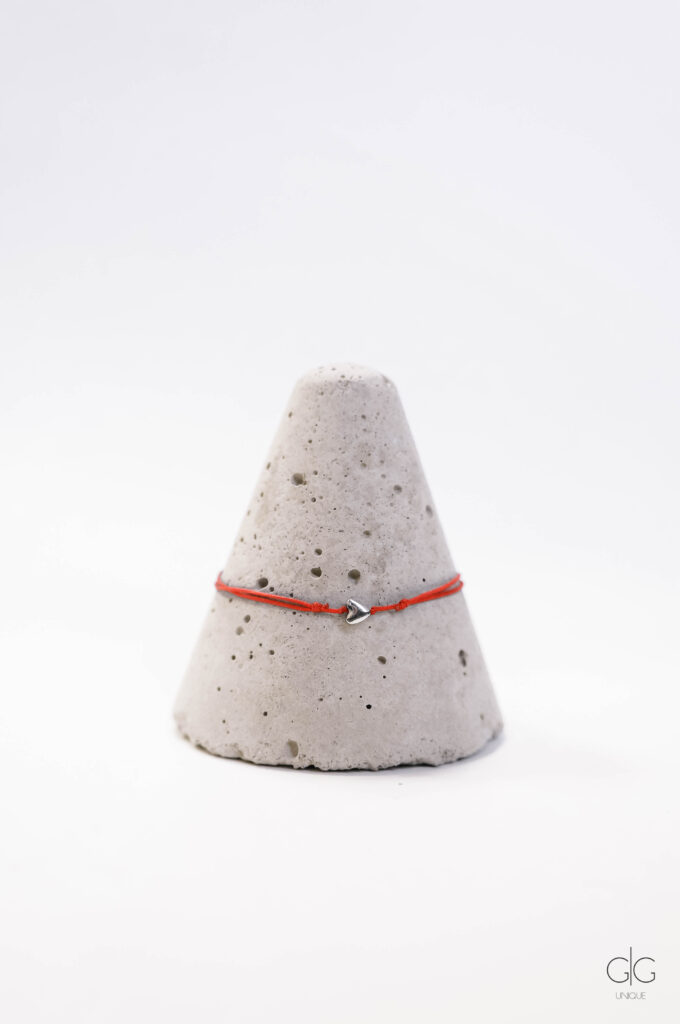
We make ours in Lithuania by hand, and the versions differ mainly in what sits on the thread. The red string with a silver heart and the gold version are both 15 euros and are the two people buy most often, usually as a pair for two friends. The red string with a solid 925 silver heart at 27 euros is the one to choose if you want the charm to outlive the thread.
For something without the heart, the unisex red string with a hematite stone at 15 euros is the most worn-by-men option we make, and the red string with a fish charm at 18 euros carries the older protective symbolism without being obvious about it. At the top, the unisex red string with a real 585 gold bubble at 42 euros pairs the simplest possible cord with solid gold, which is a combination we like more than it probably deserves.
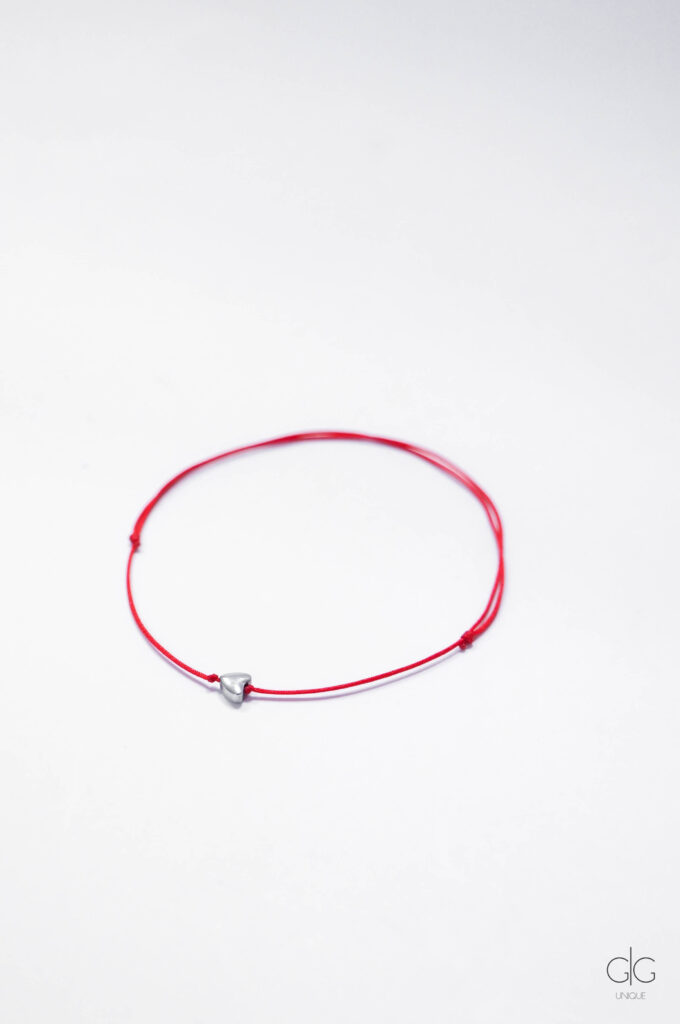
One practical point about the metal, since it decides how the piece ages: charms in plated base metal will discolour where they touch skin, and the red thread makes that discolouration very visible. Ours use 925 silver, solid gold or stainless steel for exactly that reason. If you want the longer explanation, we wrote a guide to which jewellery materials actually stay bright, including what to do about sensitive skin.
If you are buying it as a present rather than for yourself, a red string is one of the safer gifts there is, because there is no size to get wrong and no strong style commitment. Our notes on this season’s jewellery trends cover what else is being worn alongside it right now.
Caring for a red string bracelet
Very little is required, and the little that is makes the difference between three months and a year.
Take it off before swimming in chlorinated water, which bleaches red thread faster than anything else. Sea water is fine, but rinse it afterwards. Hand cream and perfume soak into cotton and dull the colour, so put them on first and the bracelet second. If the thread gets grubby, warm water and a drop of soap on a cloth is enough. Do not put it in a washing machine, which is how most of them die.
Common questions
How long does a red string bracelet last?
Worn continuously, cotton thread typically lasts three to six months. Removing it for showers and swimming can stretch that to a year or more. Traditionally you wear it until it falls off on its own.
Can you wear a red string bracelet if you are not religious?
Yes, and most people who wear one today do exactly that. It works as a reminder, a keepsake or simply an accessory, and none of the traditions it comes from require belief as a condition of wearing it.
Can two people wear matching red strings?
Yes, and it is one of the most common reasons people buy them in pairs. The Chinese red thread of fate is specifically about connection between two people, so matching bracelets fit that meaning rather than diluting it.
Should someone else tie it for you?
In the Kabbalistic tradition, yes, ideally someone who wishes you well. Outside that tradition it makes no difference, though asking a friend to tie it is a nice thing to do.
What if my red string bracelet gets dirty?
Wash it gently by hand with warm water and a little soap, then let it air-dry. Red cotton can bleed slightly the first time it gets wet, so keep it away from light-coloured fabric until it has dried once.
Is it disrespectful to wear one if it is not from my culture?
Opinions differ and it is worth thinking about. The red thread appears independently in so many traditions, including Baltic ones, that it is hard to treat as belonging to a single culture. Wearing one as an ordinary accessory is uncontroversial. Claiming a specific religious practice you do not follow is where people take issue.
The short version
A red string bracelet means protection and luck in most traditions and connection in the Chinese one. Left wrist is the usual choice, right is correct in some Hindu practice, and outside a specific ceremony either is fine. Catholics can wear one, provided the string is a reminder rather than the thing doing the work. Tie it loosely, keep it out of chlorine, and when it breaks, let it.
Everything we make is handmade in Lithuania. The red strings live in the main collection, and every one of them ships in a gift box.