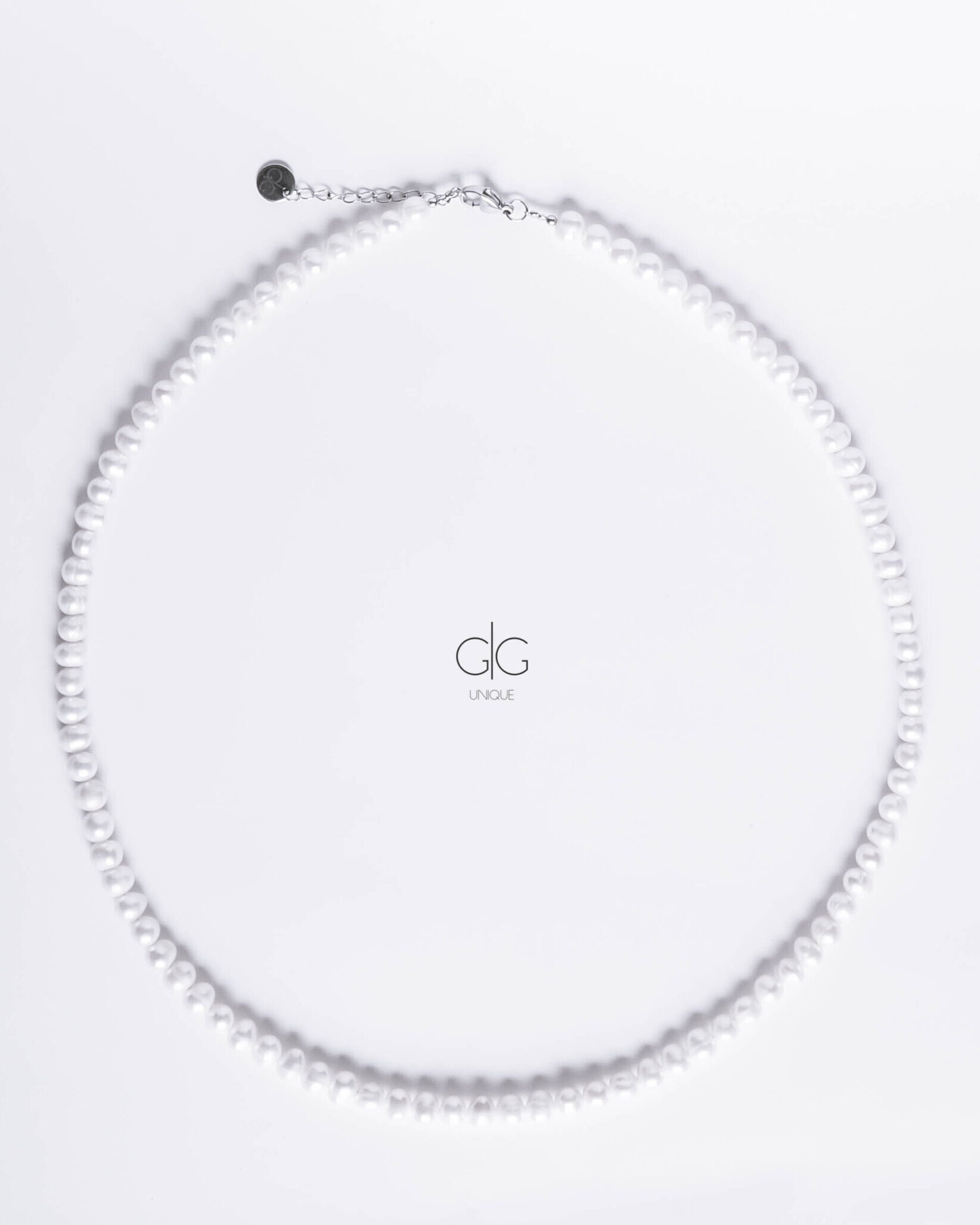
A pearl necklace is one of the few pieces of jewellery people buy without knowing what they are looking at. The word covers a €15 plastic strand and a €15,000 strand of Akoya, and the photographs look surprisingly similar on a phone screen. This guide is the version we would give a friend: what the shapes mean, which combinations actually work, how to pick a length, and what to check before you pay.
Everything below is written from what we make and sell at GG UNIQUE, so the examples are real pieces rather than stock illustrations. All of them use freshwater pearls.
Freshwater, Keshi and baroque: what you are actually buying
Three words cover most of what you will see in a listing. They are not grades, and none of them means better or worse. They describe how the pearl was formed, which is what gives it its shape.
Freshwater pearls
Grown in mussels in fresh water, mostly in China. They come in more shapes and colours than saltwater pearls and cost far less, which is why nearly every wearable pearl piece made today uses them. The nacre layer is thick, so they hold up better to daily wear than a thin-coated saltwater pearl of the same price.
Keshi pearls
Keshi form when a mollusc rejects the implanted nucleus and keeps building nacre anyway. The result is solid nacre with no bead inside, which gives Keshi their unusual lustre. They are always irregular, never round, and no two are alike. Our Keshi pearl earrings in green and the silver Keshi earrings are the clearest example of what that surface looks like in person.
Baroque shapes
Baroque simply means not round. Ovals, drops, coins, sticks, and shapes that have no name at all. For a long time these were the rejects. Then designers noticed that an irregular pearl catches light unevenly and looks alive in a way a perfect sphere does not, and the price of baroque strands went up accordingly. Our mixed shape pearl necklace puts several of them on one strand, which is the most honest way to show the range.
If you want to check a specific pearl type against an independent source rather than a shop, the GIA pearl guide is the reference we use ourselves.
Pearl and gold: why the combination keeps coming back
Pearls and gold is the pairing that never leaves. There is a reason beyond fashion. Pearl nacre has a warm undertone, and gold picks it up instead of fighting it. Silver and white gold do something different: they cool the pearl down and make it read sharper and more modern. Neither is wrong. It depends which version of the pearl you want.
A practical rule that has held up for us: if your other everyday jewellery is gold, buy the pearl in gold tone. Mixing metals works in an outfit but rarely works inside a single small piece near the face, where the eye compares them directly. Our gold hoops with pearls and the mini gold earrings with small pearls are the gold-tone side of that choice.
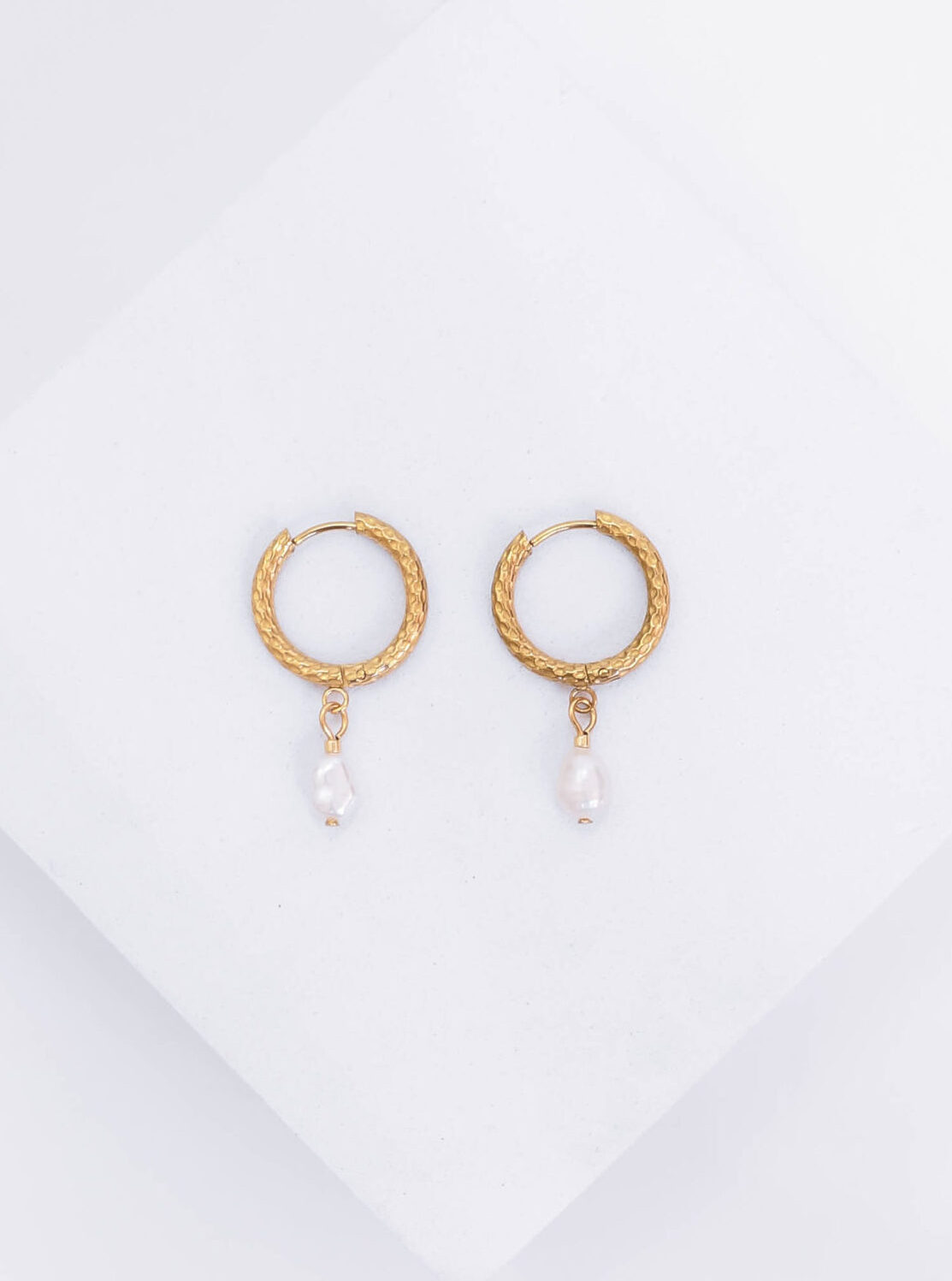
For the silver version, the pearl necklace with a 925 silver detail is the piece we point people to when they want one good thing rather than three cheap ones. Mikimoto, who started the whole cultured pearl industry in 1893, built their house style on exactly this contrast between warm nacre and cool metal.
Pearl necklaces with a pendant
A strand of pearls says one thing. A single pearl on a chain says something much quieter, and it is the version most people actually wear on a Tuesday.
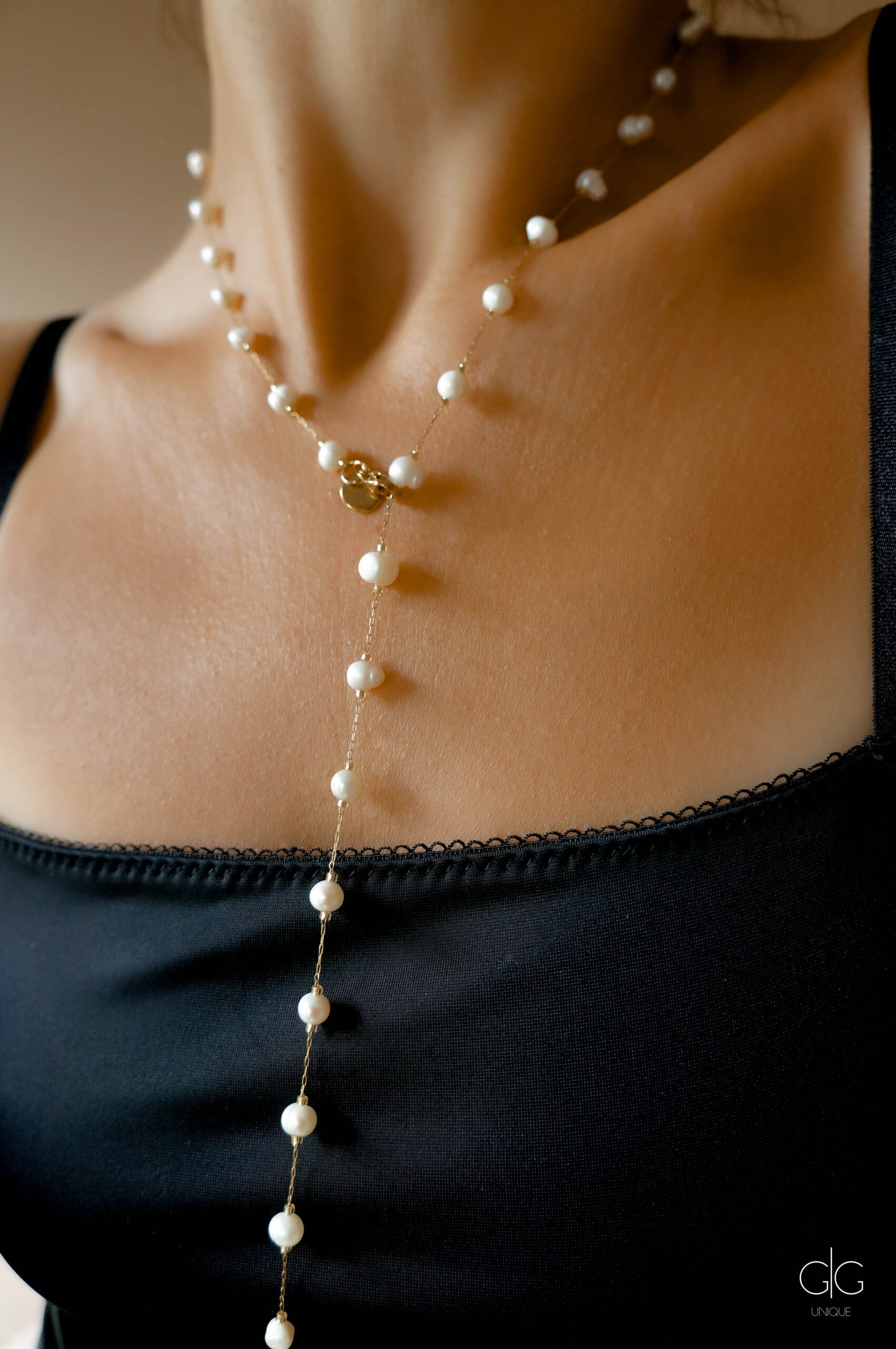
Pendant styles solve a problem that full strands have: a strand sits high and formal, and it needs the rest of the outfit to agree with it. A pendant sits wherever the chain lets it and works with a T-shirt. Our asymmetrical pearl pendant necklace is deliberately off-centre for that reason, and the chain necklace with a single pearl is the simplest version we make.
Larger pearls need a longer chain. A big pendant on a short chain sits under the chin and looks crowded. Below 8 mm you can wear any length. Above 10 mm, go to 45 cm or longer.
Long pearl chains and layering
Long pearl necklaces are the easiest way into pearls if the classic strand feels too formal for you. They fall below the collarbone, they layer with a plain chain without competing, and they read as jewellery rather than as an occasion.
Two of ours cover this: the long freshwater pearl chain necklace and the shorter pearl chain necklace. Worn together they give you the layered look without needing to buy a matching set, which is generally how layering goes wrong.
One warning about layering pearls. Pearls scratch each other. If two pearl strands rub all day, both surfaces dull within a season. Layer a pearl piece with a metal chain instead, and keep the pearls in different planes.
Pearl necklaces for men
This is no longer a niche question. Pearls on men went from a red-carpet curiosity to an ordinary purchase in about four years, and the search volume shows it clearly.
What works is not a shrunk-down women’s strand. It is a shorter length, usually 45 to 50 cm, larger and more irregular pearls, and a heavier clasp. The whole point is that it does not look delicate. Our unisex pearl necklace is built to those proportions.
If you want the reference points, Vogue has been documenting this shift since Harry Styles wore a single pearl in 2019. What started as a statement is now just an option.
Pearls with natural stones
Pearl with a coloured stone is the combination we get asked about least and sell most. It works because the stone gives the pearl something to sit against.
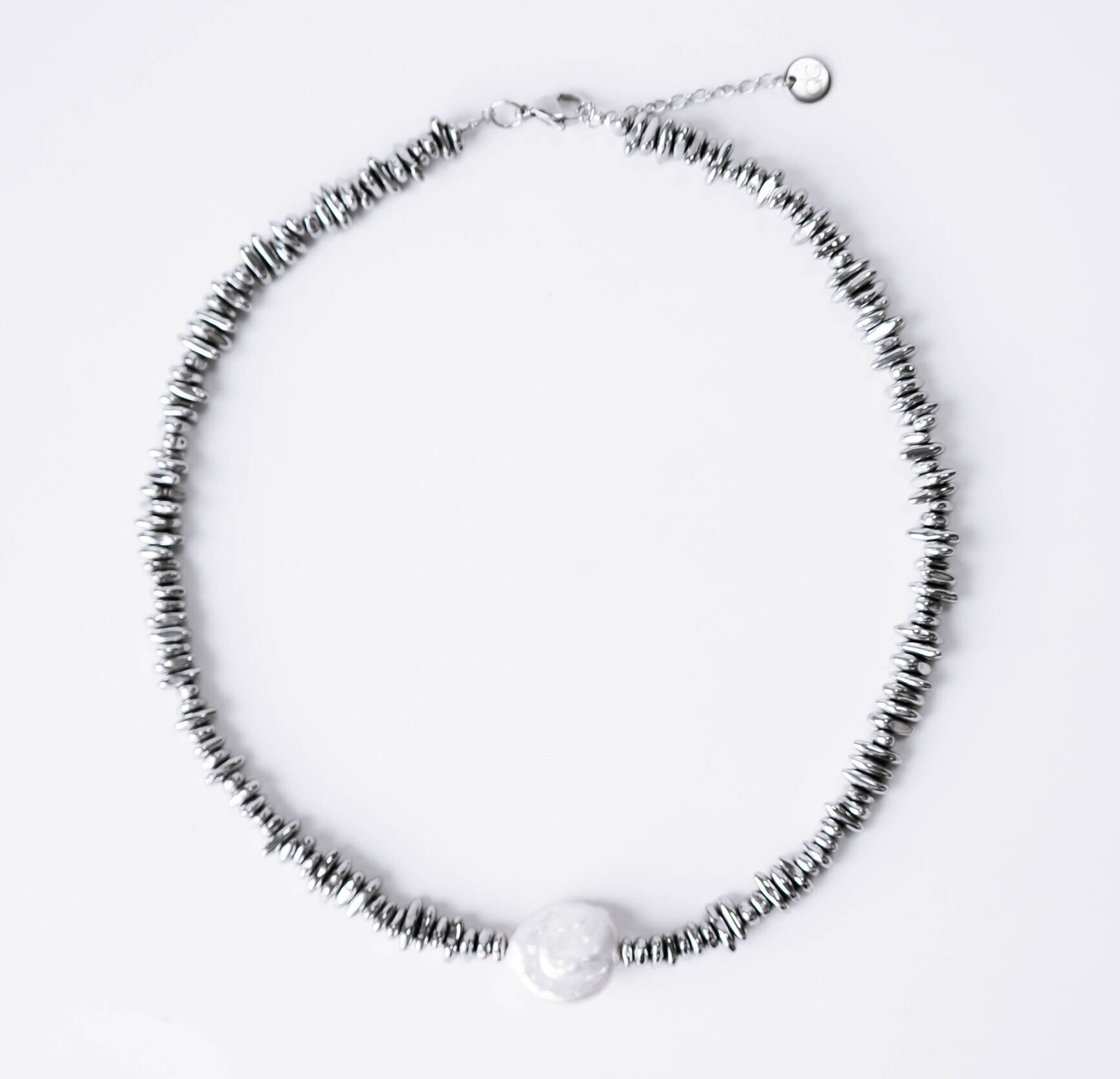
Hematite is the strongest pairing. It is dark, metallic and matte, and next to it a pearl looks brighter than it does alone. The hematite and freshwater pearl necklace is our best-selling version of this, and the hematite necklace with a Keshi pearl is the same idea with an irregular pearl.
Warmer stones do something else. Citrine with pearls pushes the whole piece golden. Blue apatite with shell and pearl goes the other way and reads coastal, which is why it sits in our Ocean Muse collection. For a bracelet, the malachite and pearl bracelet is the boldest colour contrast we make.
Earrings: white pearls, studs and ear cuffs
Earrings are the lowest-risk way to buy your first pearls. They are cheaper than a necklace, they touch almost nothing during the day, so they last longer, and they are the piece people notice first.
Three sizes cover almost everyone. Small pearls, under 6 mm, disappear into daily wear and never look overdressed, which is what our silver earrings with small pearls are for. Mid-size on a hoop gives movement, as in the hoop earrings with shell and pearls. Large or irregular pearls make the earring the whole outfit, which is the exclusive silver earring with pearls.
If you want the pearl look without a second piercing, an ear cuff does it. There is more on how cuffs sit and how to stop them sliding in our guide to building a minimalist jewellery set.
Length: the part most people get wrong
Necklace length matters more than pearl size, and it is the single most common reason a piece gets worn twice and then put away.
- 40 to 42 cm (choker): sits at the base of the neck. Good with open necklines, bad with a collar.
- 45 cm (princess): the default. Sits just below the collarbone and works with almost everything.
- 50 to 55 cm (matinee): falls on the chest. This is the layering length and the easiest length for pendants.
- 60 cm and above: long chains. Reads deliberate rather than classic.
If you are buying as a gift and do not know, buy 45 cm. It is the length that fits the most people and the most necklines.
Care: three minutes a month
Pearls are softer than almost everything else in a jewellery box. Nacre sits around 2.5 to 4.5 on the Mohs scale, softer in places than a fingernail, and it is porous. Perfume, hairspray, vinegar and lemon juice etch it permanently.
The old rule still holds and nobody has improved on it in a century: pearls go on last and come off first. On after perfume and make-up, off before you undress. Wipe them with a soft damp cloth. Never soap, never submersion, never an ultrasonic cleaner.
Store them where they can breathe. A sealed plastic bag dries nacre out. Keep them away from harder stones that will scratch them, and lay chains flat so they do not knot. If you want the full version covering metals as well as pearls, we wrote it up in our guide to jewellery that does not tarnish.
Five things to check before you buy
- Are the pearls real? Real pearls feel slightly gritty against a tooth edge and are cool to the touch. Glass warms up instantly in your hand.
- What is the metal underneath? The base metal, not the plating. Stainless steel and 925 silver both survive daily wear. Unmarked alloy does not.
- How is the strand strung? Knots between pearls stop the whole strand escaping if the thread breaks and stop the pearls grinding against each other.
- What is the clasp made of? Jewellery fails at the clasp before it fails anywhere else.
- Can it be repaired? A maker who restrings their own work builds it differently in the first place.
Where to start
If you have never owned pearls, buy earrings first. They are the cheapest entry point, they take the least abuse, and they tell you quickly whether you like pearls on yourself or only in photographs.
If you already wear pearls and want the next piece, go to a length you do not own yet rather than a second version of what you have. The whole pearl collection is here, and the pieces built around shells and sea shapes live in Ocean Muse.
Everything we make is assembled by hand in Lithuania in small numbers, which is why the irregular pearls are irregular in different ways from one piece to the next. That is the point of them.